Hurricane protection starts with a plan for your windows and doors. Explore impact-rated products, shutters, panels, and screens with the way you live in mind.
For homeowners in Palm Harbor, Dunedin, Clearwater, and the Tampa Bay area, choosing hurricane protection means considering more than one window or front door. Think about every exposed opening, the condition of existing frames, and how you would prepare the house before a storm. Better Homes Windows & Doors welcomes a conversation about your goals, whether you are planning new impact windows or comparing protection for openings you want to keep.
Wind pressure and windborne debris create different demands. A useful comparison looks at the complete product, its documented ratings, and how it is attached to your home. Discuss the specific options available for your project before selecting a system; a product’s appearance or marketing name alone does not establish its storm performance.
Hurricane fabric and similar protective systems give Palm Harbor homeowners more options when planning protection for existing windows and doors. Compare purpose-made hurricane fabric and storm screens with removable panels, accordion shutters, and roll-down shutters, considering how each option fits your home and your preparation routine. Ask about deployment, storage, maintenance, and access to the openings you use every day. Better Homes Windows & Doors can help you discuss these choices alongside impact windows and doors, with the exact product ratings, attachment requirements, and suitability for your property reviewed before a system is selected.
Prepare with a plan. Set up with confidence. Store it ready for next season.
For Palm Harbor, Dunedin, and Clearwater homeowners, hurricane fabric is one option to discuss for protecting suitable openings. A complete system includes the fabric, its attachment components, and a mounting design for your home. This guide helps you prepare and ask the right questions; your product’s current instructions and approved installation details determine how it must be fitted.
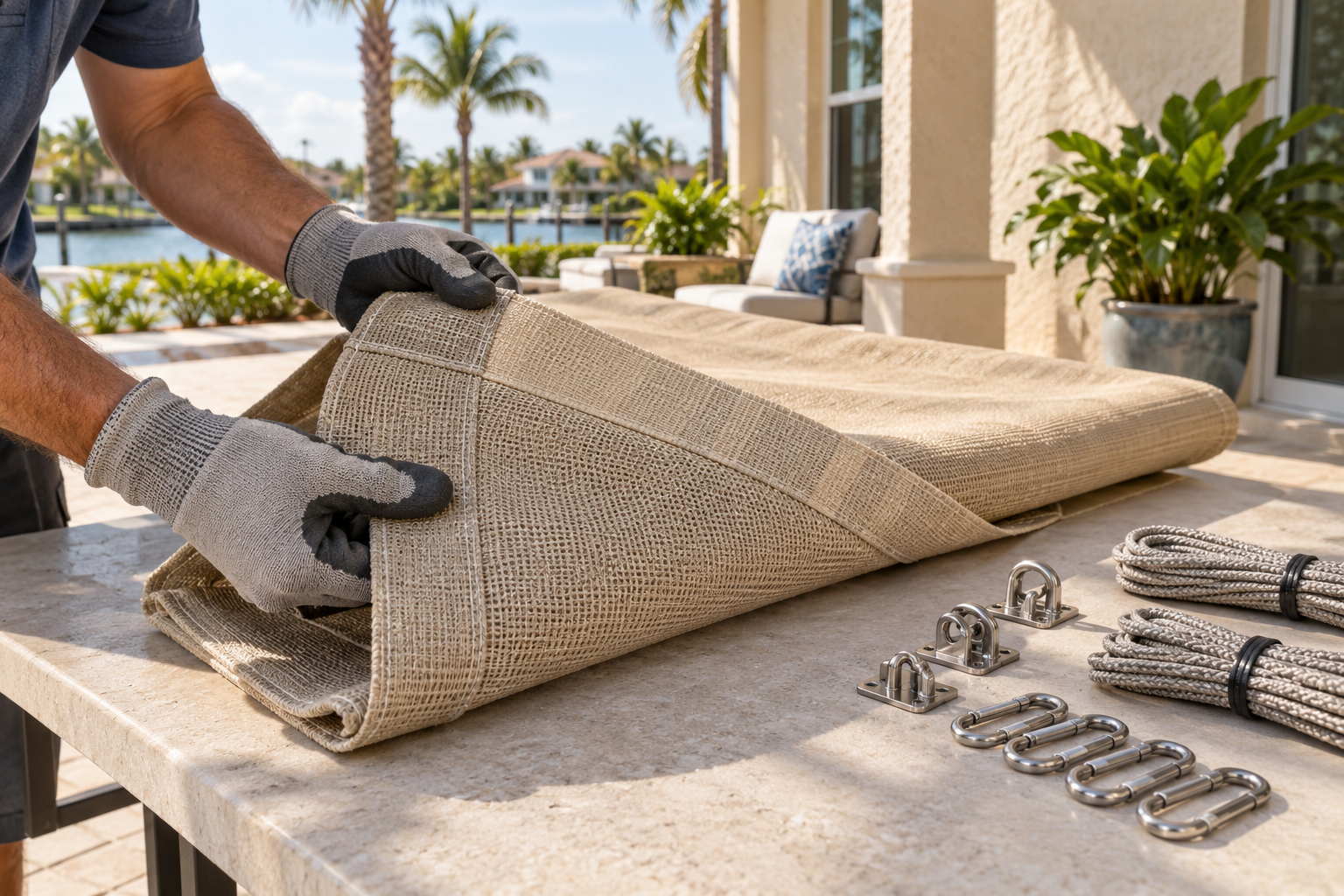
Prepare your kitLay out panels and matching hardware before you begin.WindowsMatch each panel to its assigned opening.Entry doorsPlan protection together with a usable exit route.Sliding glass doorsHave the full span and required clearances reviewed.
Illustrative sample setups, not installation diagrams or certified product examples. Actual hardware, spacing, and coverage vary by system.
01 / PLAN
Choose the system before the storm
Make a list of the windows, doors, and patio openings you want to address. Ask the installer to confirm the exact product, opening sizes, supporting wall construction, and applicable approval documents. Keep your proposal, instructions, and opening list together so you know what belongs where.
Fabric protection is purpose-made; ordinary insect screen, shade cloth, and tarps are not substitutes. Appearance alone cannot establish storm performance.
02 / PREPARE
Practice your setup in calm weather
Label panels by room or opening and note their orientation. Arrange the required hardware, tools, and instructions in one accessible place. Check for tears, damaged edges, missing parts, or loose mounting points before you need the system. Resolve problems with your installer rather than improvising replacements.
Do a practice deployment and arrange help for large or hard-to-reach openings. Finish storm preparations while conditions are safe; do not attempt outdoor setup in strong winds or lightning.
03 / INSTALL
Follow the mounting plan
First-time installation and later storm deployment are different jobs. The initial installation establishes the attachment points; deployment fits the labeled panels onto that prepared system.
Use the specified anchors, clips, and fasteners for your product and supporting structure.
Follow the approved attachment pattern, spacing, embedment, and edge-distance requirements; there is no universal spacing for every home.
Maintain the manufacturer’s required clearance from glass and follow its fitting and tension instructions.
Do not cut, add holes, substitute hardware, or rely on decorative trim as an attachment surface without manufacturer or qualified installer guidance.
Check that each panel is on the correct opening and that every required attachment is engaged. For wider sliding-door openings, confirm whether the design needs additional supports or other components. Never assume a wider piece of fabric alone is sufficient.
Plan emergency escape before covering doors or bedroom escape windows. Any release or access arrangement must be compatible with the approved system. Ask your installer to demonstrate it. Storm protection does not replace evacuation instructions.
Once conditions are safe, inspect the fabric and mounting components for damage. Have questionable parts assessed before the next use. Follow your manufacturer’s cleaning instructions: AstroGuard, for example, specifies mild detergent and warm water and warns against bleach-based cleaners.
Let panels dry completely before packing them away. Fold or roll them as directed, keep labeled hardware together, and protect stored fabric from sharp objects. Put a seasonal inspection reminder on your calendar.
Compare systems by their documented performance and suitability for your openings, not a photo or a broad “hurricane-proof” promise. Visibility, weight, storage needs, and deployment effort differ by product.
Fabric is not a flood barrier, and protecting openings does not make a home immune to storm damage. Include your roof, drainage, loose outdoor items, and household emergency plan in your preparation. For property-specific advice, bring photos and an opening list to your estimate appointment.
VISIBLE STORM PROTECTION
See the protection in place.
Explore shutters, panels, and fabric coverings for your Florida home.
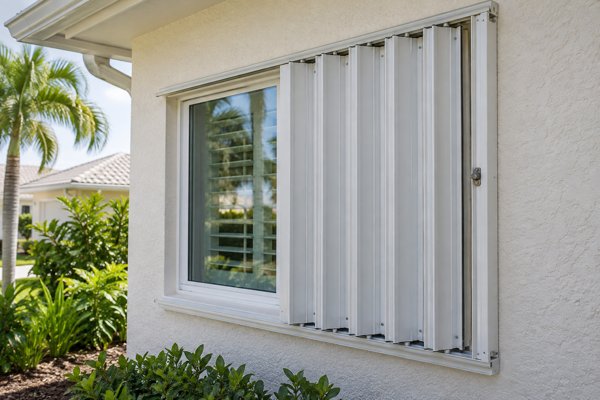
Accordion window shutters
See how folding shutter panels sit beside a window and extend across it when needed. Discuss operation and access for each opening.
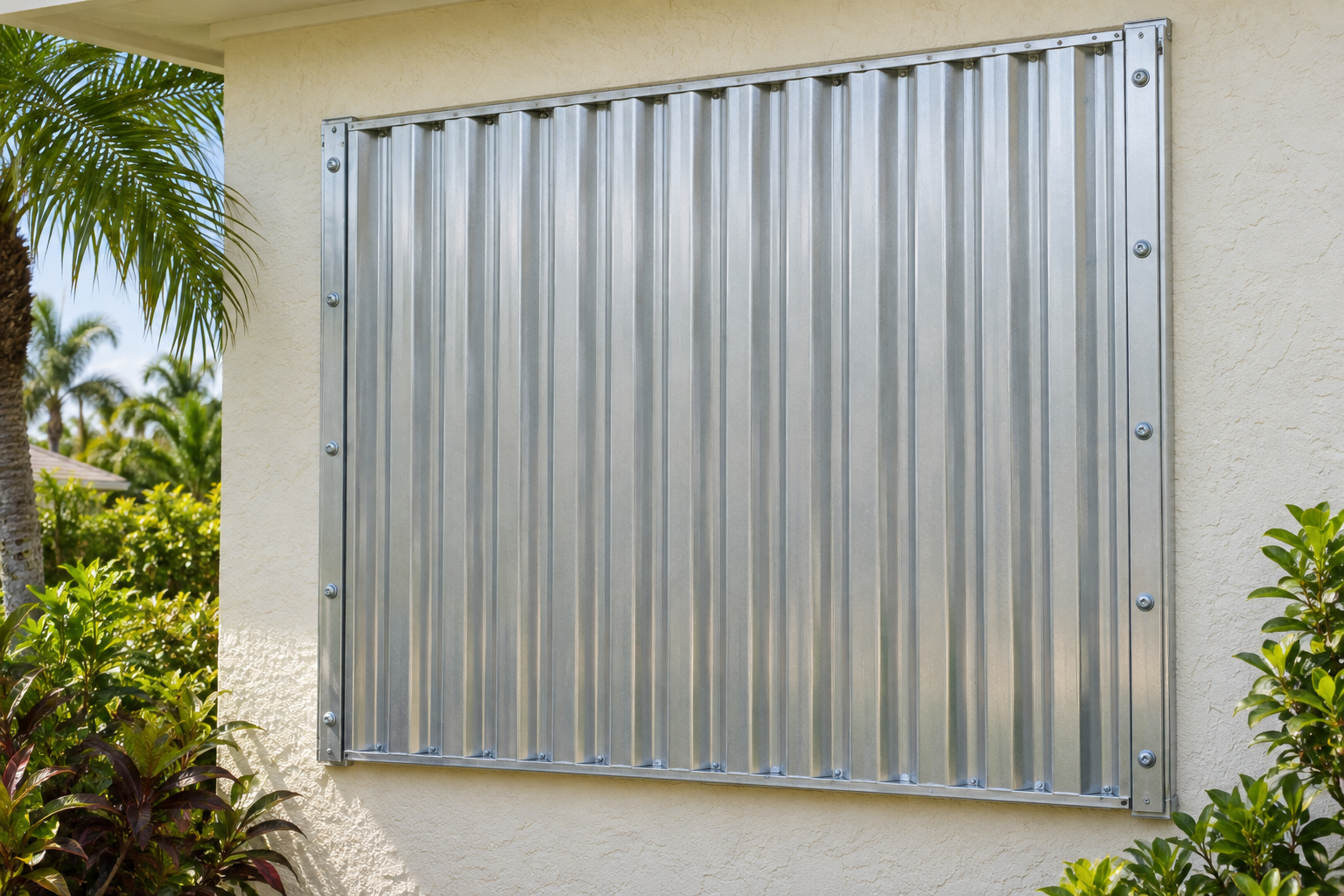
Removable metal storm panels
Visible corrugated panels cover the opening. Consider the mounting system, handling, and storage when discussing this option for your home.
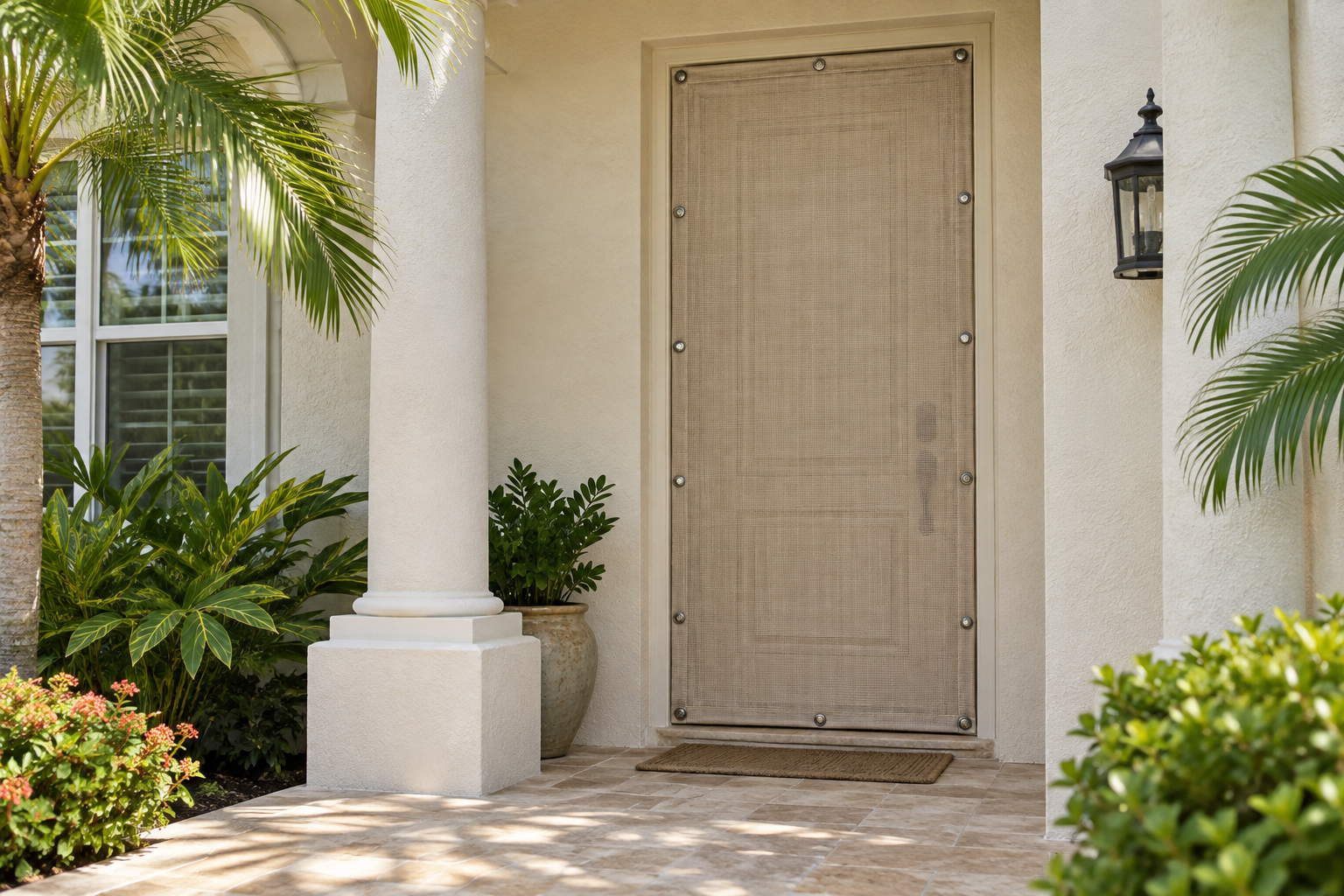
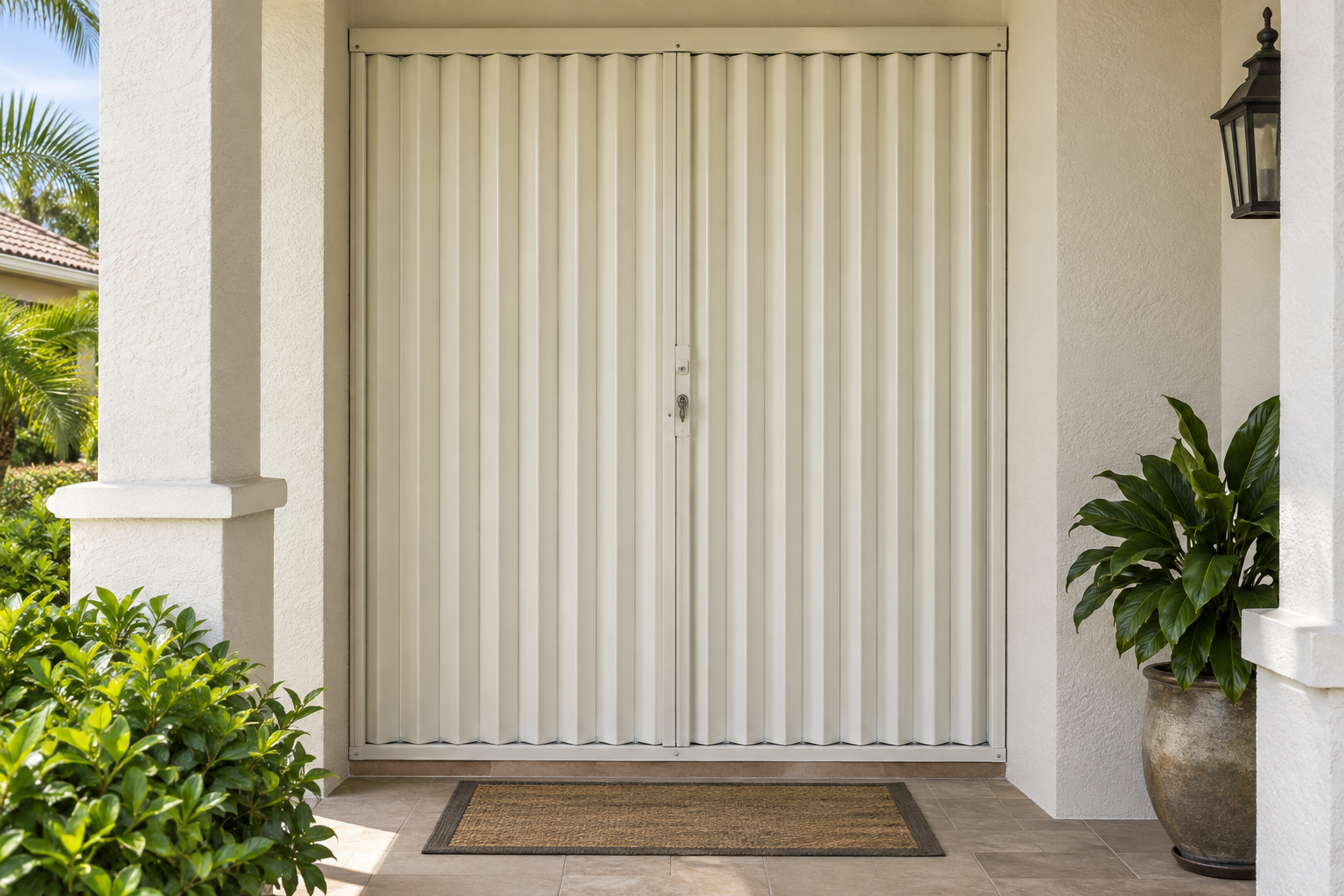
Protection for entry doors
Include your front entrance in the plan. This example shows an entry opening covered by closed accordion shutters.
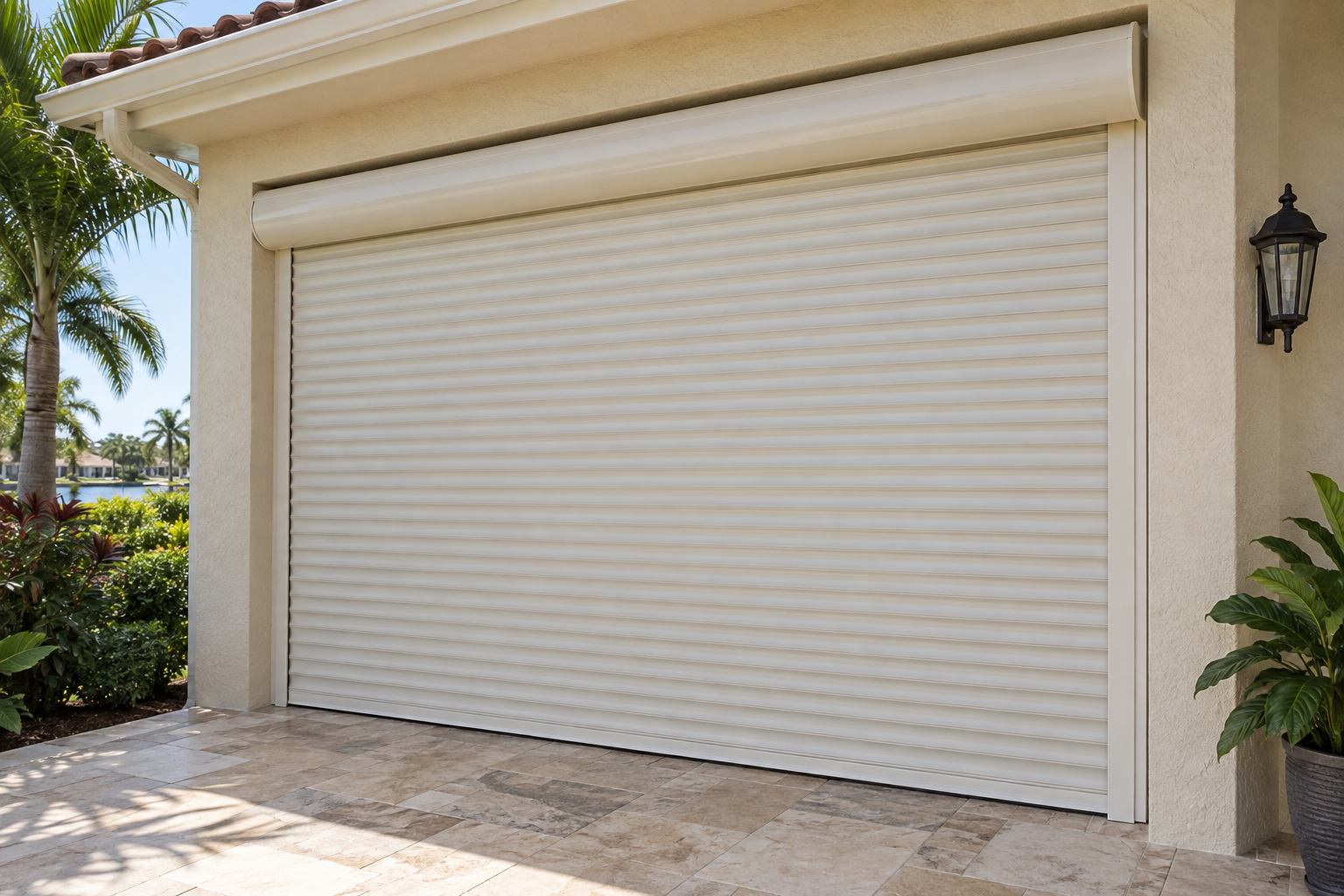
Roll-down patio protection
A lowered shutter forms a visible barrier across this patio opening. Ask about the housing, tracks, and how the system is operated.
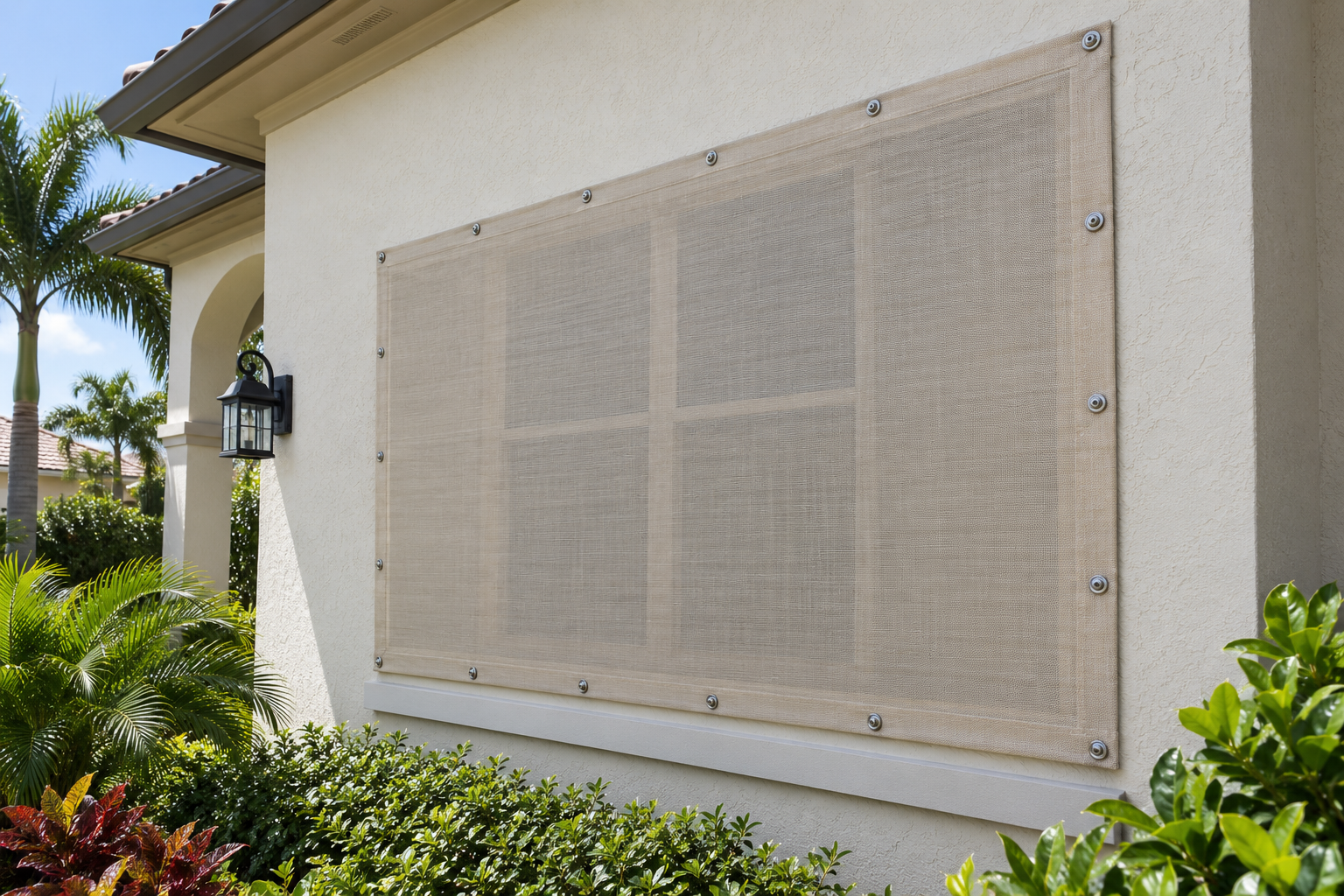
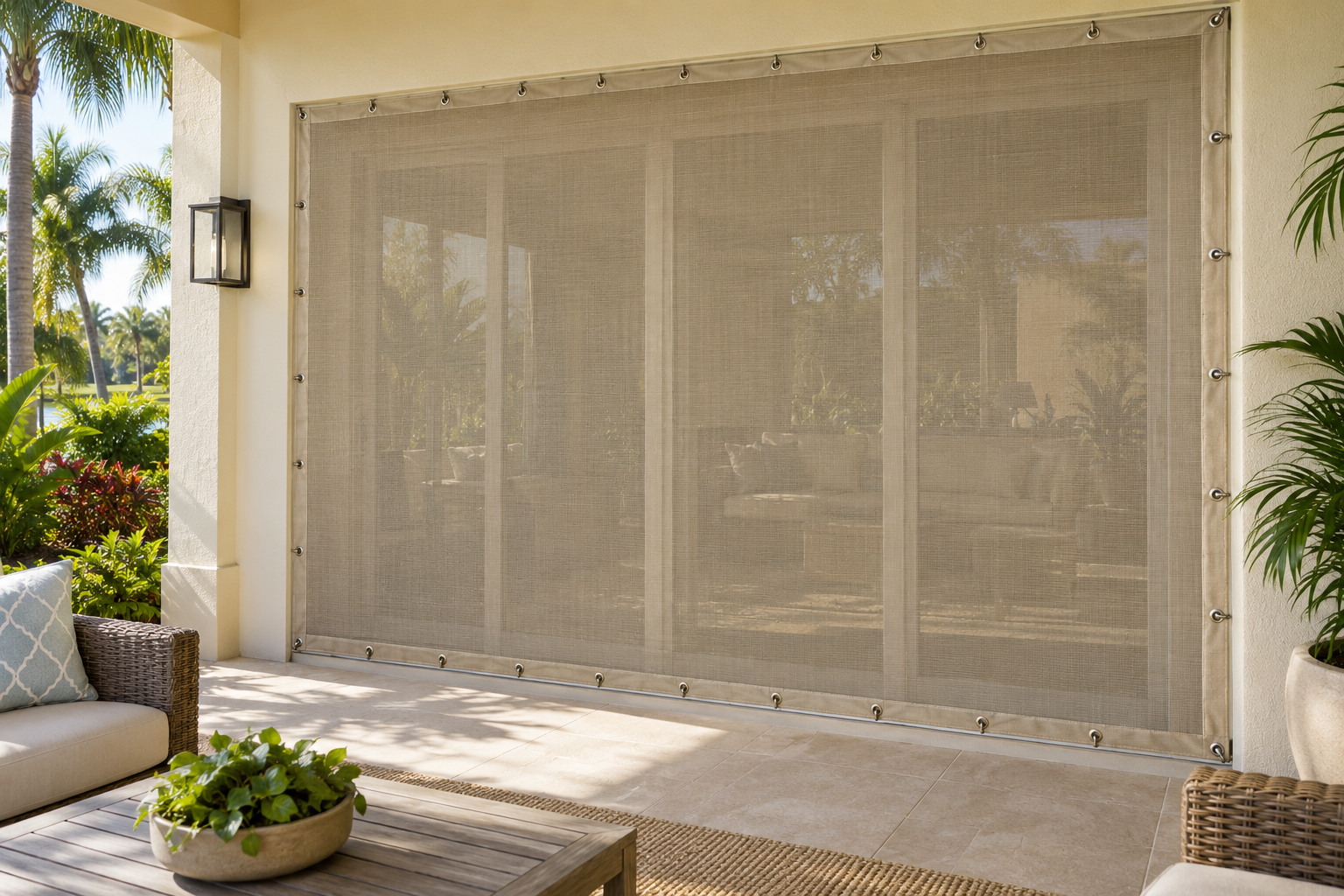
Hurricane fabric coverings
This example shows fabric spanning an opening with perimeter attachments. Review the specific system and its installation requirements for your project.
Sample photos illustrate protection styles, not completed company installations or certified products. Confirm ratings and installation requirements for the exact system in your proposal.
LARGE OPENINGS DESERVE ATTENTION
Remember your patio and entry doors.
Sliding glass doors, French doors, sidelights, and large patio openings should be included in your protection discussion. Review the entire opening, including the surrounding frame and the condition of the supporting structure. Replacing a door and adding a cover are different projects; compare the scope and suitability of each approach for your home.
Ask to review documentation for the exact product and opening size in your proposal. Measurements, mounting surfaces, clearances, and installation instructions all affect suitability. Screens and shutters also rely on their fasteners, tracks, brackets, or other attachment components. A complete estimate should explain the openings included and any preparation or repairs needed before installation.
Preparation, upkeep, and everyday use
Plan how you will operate or install the protection before severe weather arrives. Follow the manufacturer’s care instructions and check that moving parts and attachments are ready for use. Think about safe access, who will help with deployment, and where removable parts will be stored. Window and door protection is one part of storm preparation; continue to follow local emergency guidance and evacuation instructions.